
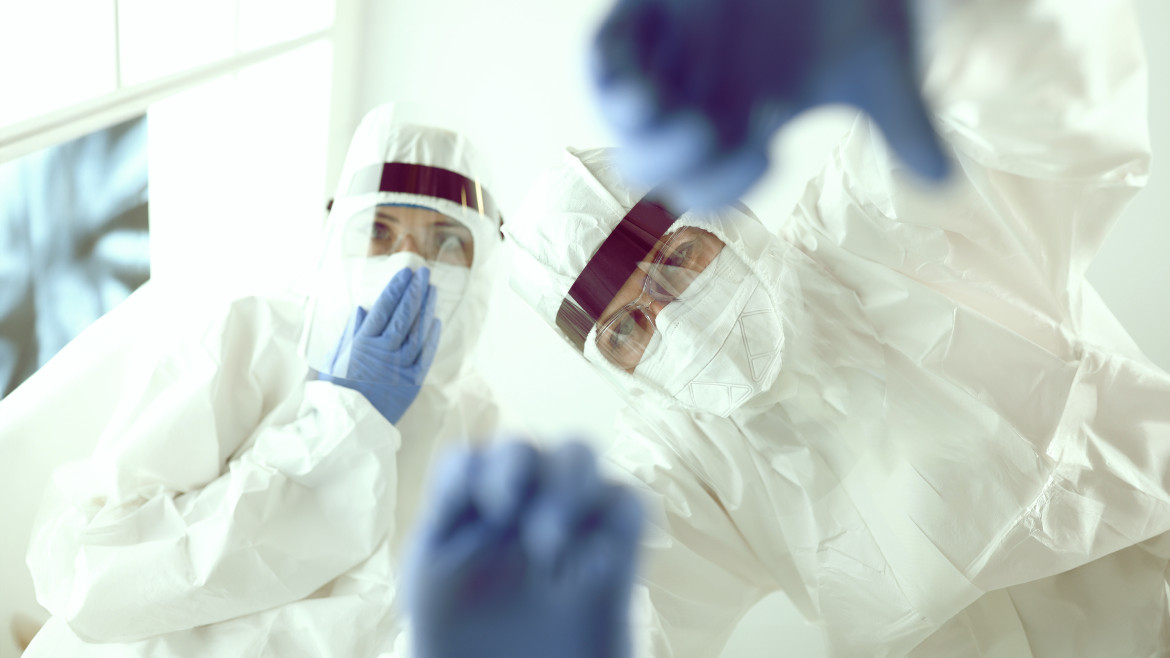
It’s not a question of “if” but “when” it will break out as most experts agree that a new pandemic will come – the question is when and what it will be like. Bird flu, monkeypox, new COVID-19 mutations, dengue, pertussis, tuberculosis, polio, cholera, and HIV… The list goes on. It includes completely new diseases caused by coronaviruses and old ones, once controlled thanks to vaccines. On top of that, there are many other risks, so mass sickness is bound to happen, probably sooner than we think.
Are we ready for this in Poland? The answer is partially heartening.
We are only ready when it comes to the issues we practised in the COVID-19 pandemic, but we are absolutely failing with systemic solutions that could protect us better.
A difficult lesson learned (partly)
The good news is thatour healthcare system is certainly more mature with the experiences that took place during the COVID-19 outbreak. We lived through the sanitary regime, and we know what it entails, as well as what the risks, restrictions, and limitations are. We can muster up our strength, or at least a significant proportion of our society can do so.
We are aware of the scale of the threat, as the COVID-19 pandemic affected almost everyone. It can be safely said that, from a cognitive perspective, the lesson has been learned by both society and the state. Of course, that wasn’t without faults, such as delayed communications regarding the threats, a low number of tests in the initial phase of the outbreak, or questionable reporting. There are also some ready-to-use solutions. We saw that some medical advice can be given remotely and that vaccinations don’t have to be done exclusively in clinics. In this respect, the system has adjusted and relieved itself.
So, equipped with pandemic experience, how are we preparing for the war against another dangerous pathogen? Well… we are doing little, to say the least.
Firstly, vaccination
During the coronavirus pandemic, vaccination rates were high, but only in certain groups. This hasn’t translated into the whole society’s approach to this form of prevention. Of course, some people have started to receive vaccines regularly, but it’s a negligible percentage on a national scale. By contrast, there is an ever-growing group of those who avoid vaccinating themselves or their children. According to the National Institute of Public Health (PZH – PIB), the number of mandatory vaccination evasions has almost doubled over the past five years, from 48,600 in 2019 to 87,300 in 20235. Diseases that have been virtually eradicated, such as whooping cough and measles, are therefore returning. This is despite a very well-structured vaccination calendar, thanks to which immunity can be reasonably built up in every child6.
Even though there are good regulations regarding mandatory and recommended vaccinations, there’s no enforcement practice. A change in attitude towards vaccination evaders is heralded only by isolated signals: this year, although the Supreme Administrative Court acknowledged that the obligation to vaccinate falls under the guarantee of the right to respect for private life, it also decided that the statutory order to vaccinate and the administrative sanctions associated with it pursue important social objectives9. The decision, although going in the right direction, is not enough to create a scale effect.
Secondly, education and prevention
Some – and it’s not a small group – believe that the coronavirus was accidental and won’t happen again. Others, on the other hand, believe that vaccinations aren’t necessary or even see them only as a source of complications. This involves a huge amount of work to be done.
Regrettably, as far as education and prevention are concerned, it’s bad. We don’t do much to make people aware that their health largely depends on themselves, i.e. on how they take care of themselves, what lifestyle they lead, how they eat, how often they get checked, and whether they get vaccinated. We don’t encourage either vaccination or preventive programmes effectively enough. What’s needed is a laborious effort – organic and, above all, effective work to change the mindsets of Polish patients, which can yield results in the long term.
I blogged about the need to educate the public and encourage people to take care of their health on May 13 – the article is available here: Prevention and education as the key to success in Polish health care.
Third, changes in the health and education systems
We should be preparing the entire health system to deal with a pandemic when it breaks out but also to prevent it from happening, or at least to delay it. Sadly, such projects aren’t in sight. At the ministerial level, there’s a lack of thoughtful long-term action that will have a tangible impact. We like to take ad hoc measures – we prefer a rush rather than systemic solutions. For example: why not take advantage of the return of nursing care to schools8? School nurses could educate children about immunisation and a healthy lifestyle. If parents are flat-earthers, it may be worthwhile for their children to provide them with sound knowledge based on facts rather than fake news. It could also be possible to introduce edubuses, following the example of mammobuses, which could visit schools and provide education on the topics there’s a need for. We won’t easily change the habits of people aged 65+, but we can start with schoolchildren.
It’s worth taking a cue from Sweden, where – if the situation demands it – changes to the school curriculum are introduced very quickly. AI as a new subject was supposed to enter Swedish schools in 2025, but the technology is developing rapidly and there’s a growing need for people who know how to use it, so the Swedes decided to accelerate the process7. Learning artificial intelligence has entered curricula now. So, you can see that the school can be meaningfully used as an ecosystem to support a change in thinking, and in Poland, as far as health goes, the matter is urgent.
The lack of thoughtful preparation for another pandemic can also be demonstrated, if only by the example of tick-borne diseases. Researchers from the University of Warsaw have initiated an excellent campaign called the National Tick Picking10. Thanks to it, the presence of African ticks has been confirmed in Poland and the locations where these dangerous arachnids appear have been listed. However, we’ve found that there are no centres in our country that can study these ticks in the long term. There are no specialised institutions to monitor on a bigger scale their occurrence and, more importantly, their effects on human health. The drive, which could prove effective, has therefore stood at half-step, having a scientific and hobbyist dimension rather than a systemic one.
A pandemic cannot be fought that way. It needs preparation right now and at all levels, i.e. education, prevention, and tangible solutions. Believing in the effectiveness of a popular rush isn’t enough here.
1. 19k cases of monkeypox in Africa since early 2024
https://www.rynekzdrowia.pl/Choroby-zakazne/19-tys-przypadkow-malpiej-ospy-w-Afryce-od-poczatku-2024-roku,261859,22.html
2. First case of new smallpox strain outside Africa
https://www.pap.pl/aktualnosci/pierwszy-przypadek-zakazenia-nowa-odmiana-ospy-poza-afryka-wideo
3. Whooping cough vaccine in short supply. New shipment due in October
https://www.rynekzdrowia.pl/Serwis-Szczepienia/Brakuje-szczepionki-przeciw-krztuscowi-Termin-nowej-dostawy-w-pazdzierniku,261563,1018.html
4. What Will Cause the Next Pandemic? Scientists Point to the Most Likely Scenario
https://pulsmedycyny.pl/co-bedzie-przyczyna-kolejnej-pandemii-naukowcy-wskazuja-na-najbardziej-prawdopodobny-scenariusz-1213897
5. https://szczepienia.pzh.gov.pl/faq/jaka-jest-liczba-uchylen-szczepien-obowiazkowych
6. https://www.gov.pl/web/zdrowie/szczepienia-obowiazkowe-i-zalecane
8. https://pacjent.gov.pl/artykul/pielegniarka-szkolna
9. https://www.prawo.pl/zdrowie/grzywna-dla-matki-za-odmowe-szczepienia-dziecka,526920.html
10. National Tick-picking
https://narodowekleszczobranie.pl/pl i 81#crp_state=1