It’s the flexibility, stupid!
In 2019, before the outbreak of the pandemic, the value of the non-wage benefits market financed by employers amounted to PLN 12.7 billion. This amount is comparable to the state’s expenditure on culture and art (PLN 14.4 billion), the judiciary (PLN 12.2 billion) and public administration (PLN 13.8 billion). In 2019, 82% of employees used non-wage benefits. (according to research by ARC Rynek i Opinia). The numbers are impressive, but not surprisingly, as according to the Randstad report, in 2020 the salary and non-wage benefits position remains crucial for 74% of employees.
The coronavirus outbreak poses an unprecedented challenge for governments, the health care system, and the education system. It kills some businesses, allows others to flourish. However, we can definitely say that it has changed the way of life and work of millions of people around the world… thus challenging thousands of employers. The new situation gives rise to new needs, and thus requirements that employers will address to their business partners.
The benefit market flexibly adjusts to the changing situation, meeting the current needs and, just like other industries, is now undergoing an accelerated course of digitizing its services.
From this perspective, the pandemic crisis may be an impulse to reevaluate the portfolio of benefits that employers offer to their employees, on the other hand, it is undoubtedly an opportunity for business in this area to significantly and very dynamically develop the offer of non-wage benefits, to a greater extent increase their individualisation, both in the context of employees and employers.
With the start of the third wave of the epidemic, more restrictions will inevitably come back, leaving most of us to stay in our homes, which are now local command centers in the full sense of the word. Fulfilling the needs of … work, shopping, learning, physical activity, health, entertainment.
The new situation does not mean that the existing needs of both professionally active and employers have been wiped out. They have been reevaluated, so the scope and model of their delivery will have to change. In the new situation, maintaining a satisfactory level of health, motivation and efficiency will be the greatest challenge for employers and service providers. Therefore, flexibility appears to be a key link in an effective strategy of implementing employee benefits. Business partners in this area should be expected to mobilize in this period to a particularly high degree, as well as to provide ongoing support in developing and searching for effective solutions
Remote work challenges
Benefit or not? Before the pandemic, 52% of Poles declared their willingness to work remotely from time to time (according to the Confidence Index). 40% of employees indicate the possibility of working from home as an expression of partner relations, and 33% as a token of appreciation from the superior. Today’s situation means that working at home has become a new natural model adopted by many companies. Although the possibility of remote work in the short term is perceived positively by employees and employers, the necessity to work remotely entails great uncertainty. Research shows that apart from short-term benefits, remote work also provides many challenges.
According to the “State of Remote Work 2020” report, when asked about the greatest challenges of remote work, 20% of employees indicate problems with effective communication with other team members, while another 20% struggle with the feeling of loneliness. For 18%, an additional challenge is the ability to effectively separate work time and time for relaxation or household activities. 12% declare significant difficulties with the effectiveness of working from home.
According to Ariadna’s survey from March 2020, nearly 1/3 of employees say that professional duties while working remotely take more time than in the office. Employees’ concerns make us aware that long-term work from home entails significant and specific challenges. Consequently, the difficulties faced by employees will soon become challenges for HR departments, which may struggle with the increased need for support in the area of team integration, maintaining appropriate motivation, as well as equipping the employee with appropriate work tools and assistance in adapting or also creating an ergonomic workplace.
Among the effective forms of strengthening relations, employees have so far indicated meetings (67%), integration trips (59%) or joint workshops. Internal interest groups (43%) or corporate social networks (37%), which are ideal in the pandemic reality, were rated much lower (according to the Pracuj.pl report “Professional lifestyle”). These forms are much more often used today for reasons of security. In addition, the flexible approach and competition in the service market has resulted in the availability of many new tools. I mean webinars in the field of ergonomics of remote work, stress reduction, development of soft skills, and for parents, animations for children, guides with games for children, access to e-book databases and audiobooks. Additionally, to support employees in building a healthy and reliable workplace, 52% of respondents admitted that their companies had started to finance work tools and home office infrastructure. It also helps increase employee productivity and signals that the company is fully committed to promoting remote work.
Today, less than 8 million Poles suffer from various types of mental problems, and in the last 10 years the number of patients has increased by 30%. Nearly 45% of employees expect their employers to support mental health prevention, according to the BUPA Group research cited by Well.hr. Every third Polish employee feels burned out, at the same time 43% of them believe that remote work can be a remedy for it (according to the ARC Rynek i Opinia report). Although remote work seems to increase the employee’s sense of security, and thus the level of stress, the research results do not seem so clear-cut and the division between employees experiencing lower, greater and constant stress levels is almost equal. In view of the above data, it seems that this area requires a lot of attention from HR teams, which, with the support of partners in the benefit area, should in the future implement coordinated programs and appropriate service packages providing support to the most vulnerable employees.
An employee in a pandemic reality
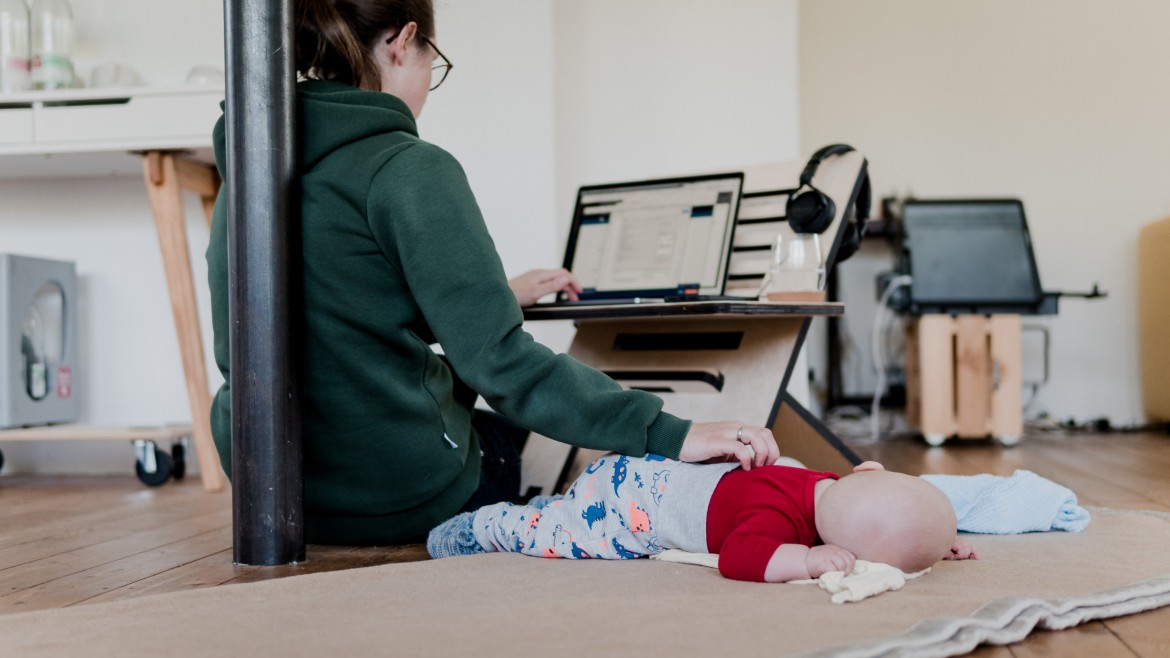
As previously established, the coronavirus pandemic has brought new social and, of course, labor challenges. However, it also revealed many challenges that employees have to face depending on their personal circumstances. We can clearly see this in the case of parental staff during school closings. According to the report prepared by Pracuj.pl in May 2020, 79% of such employees believe that working at home is a greater challenge for them than for childless people. As many as 57% of parents of school or pre-school children had a problem with separating private and work time.
Among the system support offered by the employer, they most appreciated the flexible schedule, greater possibilities of taking leave, and psychological support. Moreover, the situation is slightly worse among women. In the report “Work in the era of coronavirus.” we read that 83% of them believed that they had greater difficulties in carrying out their duties during the pandemic ”, 46% of them, however, felt that their superiors were treated with understanding. The February 2020 research made available by Pracuj.pl also indicated significant barriers to gender equality at work. As many as 71% of women believed that there was no equal chance in their professional life, and 60% that the employee’s gender had an impact on the possibilities of professional development and promotion. As you can see in this example, the leaders of the organization, as well as the HR departments supporting them, have a lot of work to do in terms of building a culture of employee support, trust and effective communication in order to understand each other’s needs.
Quick response to the changing situation, adaptation to new needs, will allow organizations to create favorable conditions for improving employer branding, attracting talents, and in the perspective of developing a market advantage. Due to the change in the market situation, exacerbated by the lockdown of the economy, the situation and the role of employee benefits from the perspective of the employer changed significantly. According to the aforementioned study “Work during a pandemic” as many as 44% of employees fear losing their job.
From the analysis “Labor market during COVID-19” conducted by Grant Thornton, we learn that the number of benefits offered to candidates in May 2020 decreased by an average of 1 compared to March 2020. The decrease in the availability of training, which only 36% of candidates could count on in April, turned out to be the most noticeable. This illustrates the quick but short-sighted actions of employers in this area. The decrease may also result from the fact that in the short term some of the benefits, in view of rapidly changing needs, turned out to be less desirable or even useless. Entrance tickets to cultural institutions, sports cards or benefits available in a stationary office, such as coffee and fruit, have given way to online services that more fully meet the needs of employees in the new reality.
The role of partners in creating solutions offered by benefit plans
HR departments in cooperation with external partners have quite a wide range of activities in the area of employee support. By implementing knowledge bases containing useful information on supporting parents with children, information on how to take care of your own health and well-being at work, or how to adapt to changes or implement stress reduction techniques. By initiating all online solutions such as: workshops, webinars, training, remote classes for employees and their families. They may include: language learning, access to multimedia digital libraries, online sports activities, yoga, individual psychological support sessions.
Focusing on supporting employees through individual mentoring sessions, webinars for managers regarding the management and support of the team in remote work. In addition, by launching access to digital subscription of trade magazines, concierge services, etc. In such a dynamic environment, ongoing communication seems to be extremely important, including efficient diagnosis of needs and ongoing assessment of solutions introduced for employees. Employee needs surveys, assessment of managers’ support, assessment of tools that they have at their disposal when working remotely. In addition, simple studies of well-being and views on solutions introduced by employers in the field of at least partial return to the office, rotation, shift work. Such activities allow management boards to be better prepared for challenges and to better assess the effects of their future decisions.
Surveys and polls, in the absence of face-to-face meetings, remain the main source of information about the mood and needs prevailing in the company. The implemented solutions, including benefits, must respond to the real needs of users, and also provide a high degree of flexibility. The situation of a significant change in the employers’ approach to the area of benefits, the need to effectively allocate costs in this area is also an opportunity for service providers and partners in this area. HR departments faced with specific requirements by management boards will expect flexible and quick action. Targeting a real solution to the needs of employees, as well as indicating and supporting the implementation of specific solutions. This will mean that the famous “fruit Wednesdays” may not come back to us, at least not in the current shape.
Cafeteria-style benefit plans as a response to a changing environment?
Employee benefits have been growing for years, striving to meet the various needs of employees. So far, one of the main challenges has been the individualization of solutions and the provision of a wide range of them. In a pandemic reality, in which employers pay even more attention to the money spent, the challenge will be to obtain greater satisfaction and commitment of employees … for less.
According to the report “The future of wellbeing and employee benefits – new cleanup!” of the five most common benefits from the pre-pandemic period, only … two remained in the top five of the pandemic period – a fitness card and a medical care package.
Employees more and more often expect benefits from not only simple, mass solutions related to office work or an entry card to a fitness club. However, they appreciate support in everyday life. Especially today, solutions that facilitate the daily functioning of people with different, after all, needs are desirable. The answer to these challenges seems to be cafeteria programs, in which employees themselves decide how to consume the funds they receive from employers. They can do it in accordance with their current needs, without the need to make a long-term declaration of using the offered solutions. In addition, it is worth pointing out that benefits by their very nature should bring added value for the employee. In the event of radical changes in the way the company operates – for example through remote work or a shift system, employees are deprived of the real possibility of using some of the existing solutions.
As I wrote earlier, one of the key challenges today is keeping the team working remotely motivated. The Health Enhancement Research Organization (HERO) identifies sport and good nutrition as the main sources of increasing employee productivity by a quarter. At the same time, it indicates that they contribute to reducing absenteeism by at least a dozen or so percent. Moreover, their positive impact on the increase in employee engagement by 15% can also be observed.
Therefore, prepaid cards that can be topped up online, from the benefit budget, also seem to be a good solution. Employees who, in the era of remote work, cannot take advantage of the benefits offered in stationary, can use this form of financing their grocery purchases or lunch, or diet catering without leaving home. According to the study “Time of motivation – effectiveness of non-wage benefits” carried out by SW Research, 64% of employees would be willing to replace the non-wage benefits received from the employer with a prepaid card with which they could finance lunch or grocery shopping.
Health doesn’t come cheap
In the pandemic reality, medical packages were ahead of the list of the most desirable benefits of a fitness card. It seems, however, that medical packages are only one of the elements that HR departments should expect from partners in this area. Such cooperation, especially in the present reality, can and should have a much wider scope.
This is because medical service providers can provide support in improving the safety of the functioning of companies in the era of a pandemic. Assistance in the development of epidemiological safety instructions should be considered essential. In addition, medical partners can be invaluable in the area of organizing the so-called safely return to the office. Advice on the type, scope and location of protection measures, as well as rules for the use of common areas.
In addition, especially in production plants, where remote work is not possible, especially in the current situation of an avalanche of morbidity, medical service providers at the employer’s request may be involved in conducting coronavirus testing for employees and even their families. Ultimately, the tests will help top management manage risk and employee safety. Also in making an informed decision related to the implementation of solutions allowing for the continuity of work and, as a result, minimization of costs.
The scope of medical packages, like the other non-wage benefits discussed earlier, will not be subject to such radical changes. Nevertheless, in view of the aforementioned challenges in maintaining employee motivation, there will certainly be a need to organize additional support in the field of psychology and psychiatry, such as webinars, consultations with specialists, or online workshops.
I am convinced that the key words for effective functioning in the age of a pandemic will be: understanding, flexibility and cooperation. This applies, of course, to employees, employers and business partners. HR departments should carefully listen to the voice of employees in order to effectively develop appropriate solutions with business partners, taking into account their needs and the possibilities of the employer. Employees actively communicate their needs, show understanding and flexibility in this difficult for all situations. Service providers, on the other hand, support the employer in developing effective and realistic solutions, because by bringing added value to employees and awareness of well-spent funds, employers are able to retain clients for whom services in this area are most easily converted into real and hard savings.